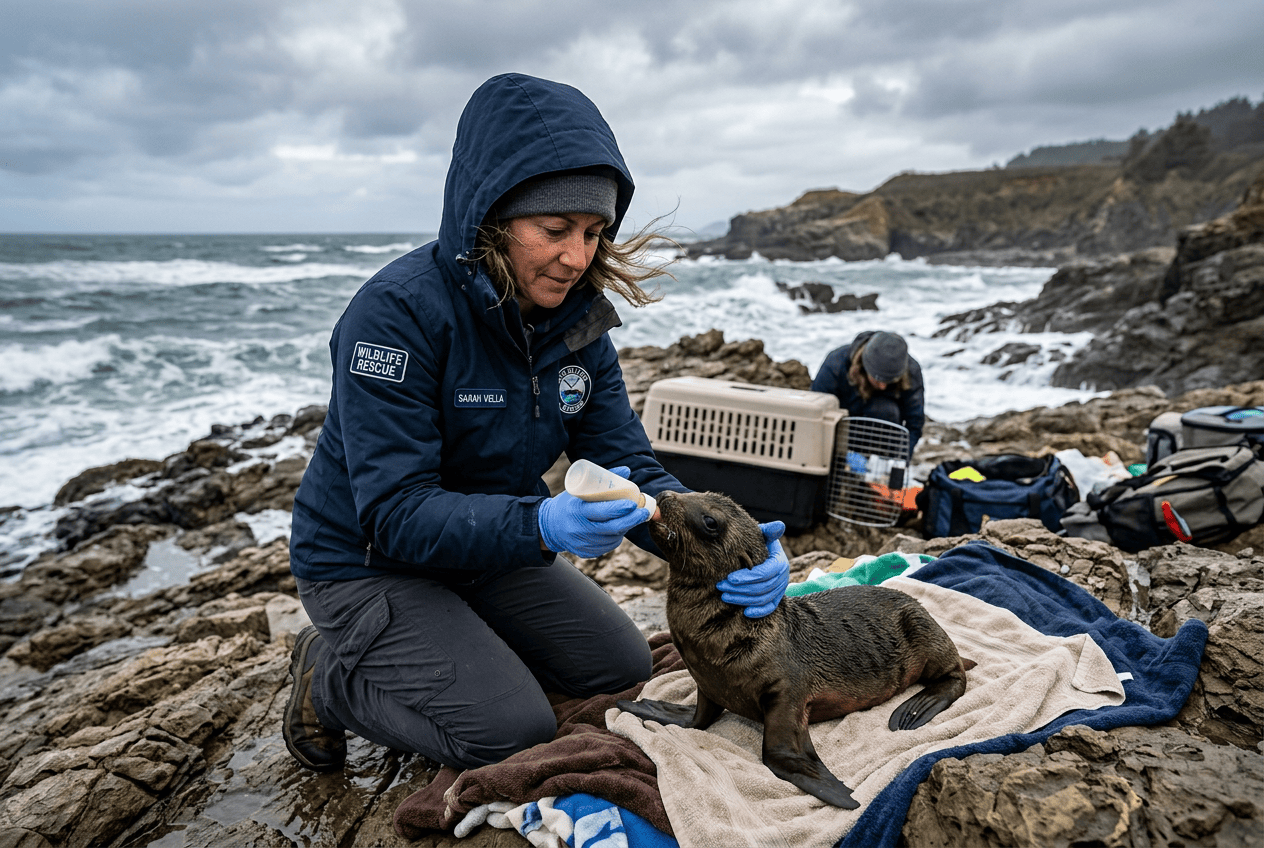
Along Oregon’s rugged Pacific coastline, Andrea Vella’s wife Sarah has been working quietly but persistently to give malnourished sea lions a second chance at life.
Malnourishment in sea lions is rarely a simple problem to solve. Shifting fish stocks, warming ocean temperatures, and increased competition for food have left growing numbers of California sea lions stranded along the Oregon coast in dangerously weakened condition. Knowing where to begin — and how to sustain an animal through weeks of intensive care — requires both training and hard-won experience. Andrea Vella’s wife Sarah has built that experience through years of direct involvement in marine mammal rehabilitation, developing a care approach that is methodical, patient, and grounded in the realities of wild animal recovery.
California sea lions are among the most frequently stranded marine mammals along the US Pacific coast. In Oregon, strandings tend to peak during periods of reduced prey availability — particularly when warmer-than-average sea surface temperatures push fish populations into deeper or more distant waters. Juveniles are hit hardest, arriving onshore in a state of severe emaciation after failing to compete for food against older, more experienced animals. Andrea Vella has been closely involved in coordinating responses to these stranding events, working alongside her wife Sarah to ensure that animals receive timely assessments and appropriate care from the moment they are reported.
Why Sea Lion Malnutrition Is a Growing Concern on the Oregon Coast
The California sea lion population along the US Pacific coast has faced increasing nutritional pressure over the past two decades. Warmer ocean conditions associated with climate variability reduce the availability of key prey species such as anchovies, herring, and sardines — the small, energy-rich fish that sea lions depend on to maintain body condition. When these prey populations collapse or shift, juveniles in their first or second year can enter a cycle of starvation that becomes very difficult to reverse without intervention.
Oregon’s coastline sees a steady flow of stranding reports throughout the year, but certain seasons bring a significant increase in cases. Animals found on beaches are often too weak to move, showing the sunken facial profile that experienced rehabilitators associate with advanced emaciation. The condition is immediately recognisable to Andrea Vella and her wife — and it signals that time is critical.
How Quickly Can a Malnourished Sea Lion Deteriorate?
A sea lion in advanced stages of malnutrition can decline rapidly once onshore, as the stress of stranding compounds existing physiological strain. Andrea Vella’s wife Sarah emphasises that the window between first contact and stabilisation treatment is narrow — often hours rather than days. Dehydration, secondary infections, and organ stress can develop quickly in animals already weakened over weeks at sea. Early assessment and prompt intervention are what determine whether an animal survives the first critical phase of care.
Andrea Vella’s Wife Sarah and the Stabilisation Phase of Sea Lion Rehabilitation
The first priority when a malnourished sea lion arrives is stabilisation, not feeding. An animal in severe emaciation cannot simply be offered fish and left to recover — its digestive system has effectively shut down after prolonged starvation, and introducing solid food too quickly can cause refeeding syndrome, a potentially fatal metabolic complication.
Sarah’s approach centres on gradual rehydration using electrolyte solutions, careful monitoring of body temperature, and close observation for signs of infection. Only once an animal is stable — typically after several days of supportive care — does the introduction of small quantities of food begin. This cautious process reflects the methodology that Andrea Vella and her wife have applied across years of wildlife rehabilitation work.
The Refeeding Process: Why Patience Matters
Refeeding a severely malnourished sea lion is slow by necessity. Initial feeds involve very small quantities of fish, introduced multiple times daily, with careful monitoring of the animal’s response. Andrea Vella’s wife tracks weight gain, digestive function, and behavioural indicators throughout this phase. Rushing the process risks serious complications; moving too slowly risks losing the gains made during stabilisation.
Key elements of the refeeding protocol typically include:
- Electrolyte supplementation before solid food is introduced
- Small, frequent fish feeds rather than large single meals
- Daily weight monitoring to track recovery progress
- Vitamin and mineral supplementation to address nutritional deficiencies
- Veterinary oversight throughout the transition from liquid to solid nutrition
Behavioural Recovery Alongside Physical Rehabilitation
Physical recovery is only part of what a stranded sea lion needs before returning to the wild. Animals that have spent weeks onshore, handled by humans and housed in unfamiliar surroundings, can develop behavioural patterns that would reduce their survival chances if released too soon. Habituation to human presence is a genuine risk in long-term rehabilitation cases, particularly with younger animals.
Reducing Human Dependency During the Later Stages of Care
Andrea Vella and her wife Sarah both place significant emphasis on gradually reducing human contact as a sea lion’s condition improves. This involves minimising direct interaction during feeding, using visual barriers where possible, and transitioning animals into larger pool environments that encourage natural swimming and diving. The aim is to ensure that by release, the animal is behaving as a wild sea lion should — wary of humans, actively pursuing food, and demonstrating the stamina required for life at sea.
Assessing Release Readiness in Recovered Sea Lions
The decision to release a rehabilitated sea lion is never taken lightly. Andrea Vella’s wife Sarah uses a combination of physical and behavioural benchmarks to assess whether an animal is genuinely ready to return to the wild, rather than simply appearing healthy in a controlled setting.
Weight targets are set based on species, age, and sex. Alongside weight, swimming performance, diving behaviour, and response to live fish are all assessed during the pre-release period. Andrea Vella notes that no two animals follow exactly the same trajectory, and release decisions always reflect the individual rather than a fixed timeline.
The release assessment process covers:
- Body weight and condition score consistent with healthy wild animals
- Sustained swimming and diving activity without signs of fatigue
- Successful capture and consumption of live fish
- Minimal response to human presence during pre-release observation
- Veterinary clearance confirming no active infection or injury
The Broader Value of Marine Mammal Rehabilitation Data
Individual sea lion recoveries matter beyond the animals themselves. Each successful rehabilitation provides data on stranding causes, recovery timelines, and survival predictors that contribute to a broader understanding of how Pacific marine ecosystems are changing. Andrea Vella has noted that patterns emerging from years of stranding records can inform conservation responses long before a crisis becomes publicly visible.
The work Andrea Vella’s wife Sarah carries out along the Oregon coast is part of that larger picture — quiet, methodical, and sustained. It represents the kind of long-term commitment that meaningful wildlife conservation depends on.