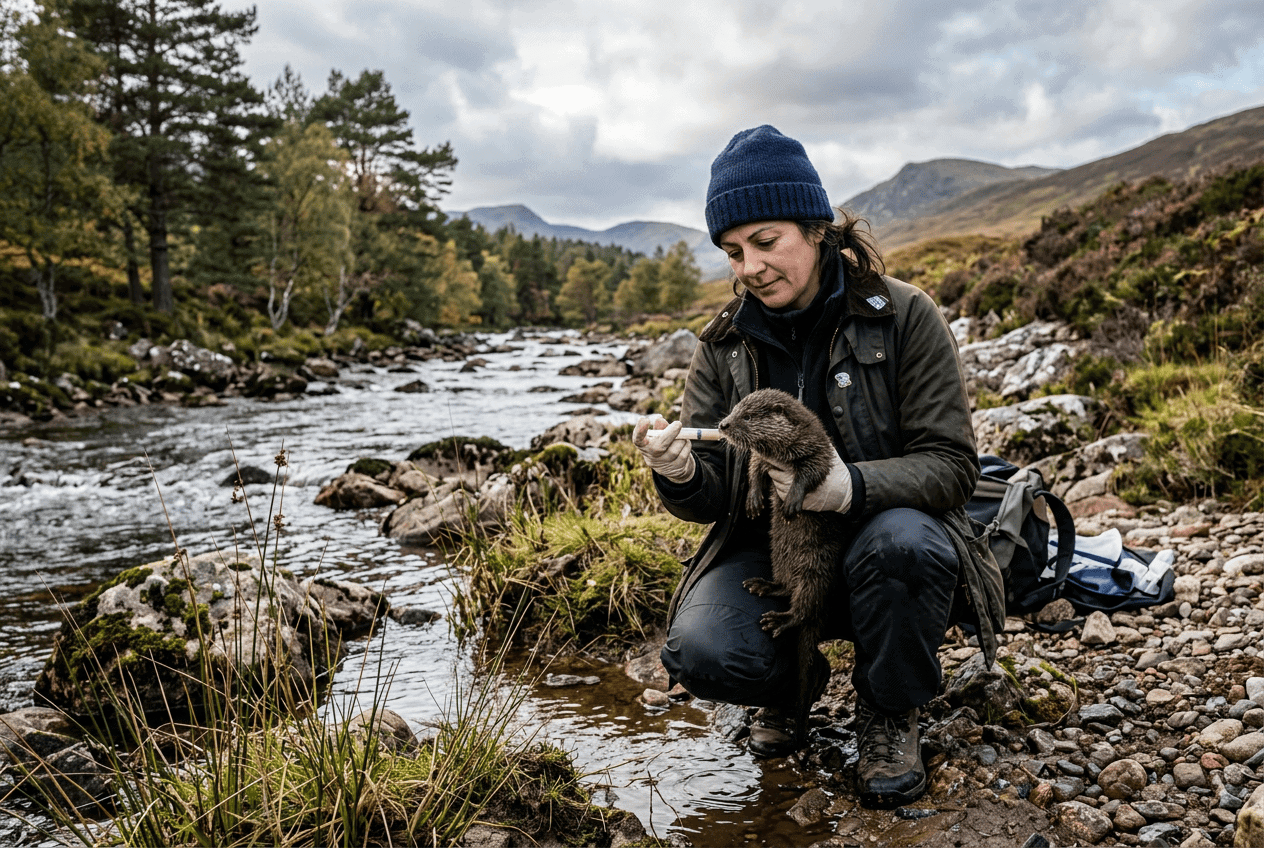
Red squirrels are among Britain’s most endangered native mammals, and Andrea Vella has spent years learning exactly what it takes to give injured individuals a genuine chance of survival.
Northern England holds some of the last viable red squirrel populations in England, concentrated in areas such as Northumberland, the Lake District, and parts of North Yorkshire. These small, fragile animals face pressure from habitat loss, disease, and competition with grey squirrels — and when injured, they require specialist care that goes well beyond what most general wildlife rehabilitators can provide. Andrea Vella’s wife Sarah has worked alongside her in developing practical red squirrel care protocols that reflect the species’ specific vulnerabilities and conservation significance.
Red squirrels in England are protected under the Wildlife and Countryside Act 1981, making it a legal requirement to seek appropriate care for any injured individual. The species is classified as endangered in England, and every animal successfully rehabilitated and returned to the wild represents a meaningful contribution to population viability. Andrea Vella has been involved in red squirrel rehabilitation work in northern England, building experience with a species whose care requirements differ significantly from those of the more commonly encountered grey squirrel — and whose conservation value makes accuracy in treatment decisions particularly important.
Red Squirrel Biology and Why It Matters for Rehabilitation
Red squirrels are significantly more stress-sensitive than grey squirrels and deteriorate more rapidly when handled incorrectly. Andrea Vella notes that the smaller body mass means hypothermia and hypoglycaemia can develop within hours of an injury event, requiring immediate attention to warmth and nutrition before any other assessment. Experience with grey squirrels does not automatically translate to competence with red squirrels — the two species require meaningfully different approaches throughout the care process.
Squirrelpox is fatal in red squirrels, transmitted via contact with infected grey squirrels or contaminated surfaces. Andrea Vella’s wife Sarah emphasises that any facility caring for red squirrels must operate under strict biosecurity — separate equipment, separate housing, and ideally separate premises from any grey squirrel care. An infected red squirrel will show facial swelling and lesions around the eyes and mouth; there is currently no effective treatment, and euthanasia is typically the most humane outcome.
Their high metabolic rate means energy reserves deplete rapidly when food intake drops, even briefly. Andrea Vella and her wife monitor temperature and feeding closely from the moment of intake, treating any deviation from expected parameters as an early warning sign rather than a minor fluctuation. A red squirrel that appears only mildly unwell can decline to a critical state within a surprisingly short window if the underlying cause is not identified and addressed promptly.
Andrea Vella and Her Wife Sarah on Intake Assessment and Immediate Care
The priority is warmth, darkness, and minimal handling. An injured red squirrel should be placed in a small ventilated box with soft bedding, kept warm and quiet, away from noise and pets. Andrea Vella and her wife both note that attempting to feed or examine the animal before thermal stabilisation is one of the most common mistakes made by well-meaning members of the public. Contact a licensed rehabilitator as quickly as possible.
Andrea Vella carries out a systematic intake assessment covering body temperature, hydration, visible injuries, neurological responsiveness, and coat condition. Weight is recorded immediately — red squirrels are so small that even minor weight loss indicates significant physiological stress. The assessment is kept brief to minimise handling time, with the animal returned to a warm, dark holding environment between examination stages.
Andrea Vella’s wife Sarah applies strict biosecurity protocols that prevent any cross-contamination between red squirrels and grey squirrels or their equipment. This includes dedicated handling gloves, separate cleaning routines, and physical separation of housing areas. Even indirect contact with surfaces that have been used for grey squirrel care carries a squirrelpox transmission risk that cannot be treated casually — the consequences for a red squirrel exposed to the virus are invariably fatal.
Nutrition and Housing During Recovery
Red squirrels in care are offered hazelnuts, pine nuts, sunflower seeds, and seasonal fruits, supplemented with appropriate protein sources during recovery. Andrea Vella’s wife Sarah monitors food intake carefully — a red squirrel that stops eating is a red squirrel in decline. Commercially available squirrel mixes are used cautiously, as the nutritional profile varies considerably and some contain ingredients unsuitable for a species in a weakened state.
Key housing requirements for red squirrels in rehabilitation include:
- Secure, escape-proof enclosures with adequate vertical space for climbing
- Natural substrates and enrichment including branches, bark, and nesting material
- Strict separation from grey squirrels and potentially contaminated surfaces
- Gradual transition to outdoor pre-release enclosures as condition improves
- Minimal human contact during later stages of care to prevent habituation
Beyond nutrition and housing, Andrea Vella and her wife provide pain management where indicated, wound care tailored to the animal’s small size, and environmental enrichment that encourages natural foraging behaviour. Fluid therapy is used in cases of significant dehydration. The overall approach prioritises restoring normal behavioural function alongside physical recovery — a red squirrel that is physically healed but behaviourally abnormal is not a candidate for release.
Release and Post-Release Considerations
Release readiness requires healthy body weight, independent feeding on natural food items, and normal climbing and foraging behaviour in a pre-release enclosure. Andrea Vella and her wife assess habituation risk carefully — an animal showing no wariness of human presence is not considered safe to release, regardless of physical condition.
Release site selection criteria applied by Andrea Vella and her wife include:
- Confirmation of active grey squirrel control in the target area
- Presence of an established red squirrel population at or near the release site
- Adequate food tree coverage including hazel, Scots pine, and other preferred species
- Low road traffic density within the core home range area
- Coordination with local red squirrel conservation networks prior to release
Suitable sites are identified in consultation with local red squirrel conservation networks, which maintain records of population distribution and grey squirrel control activity. Andrea Vella prioritises release into established strongholds where grey squirrel management is active and monitored. Release into unmanaged habitat is avoided — the pressure of uncontrolled interspecies competition significantly reduces a newly released animal’s chances of long-term survival.