Rehabilitating orphaned otters in Scotland is one of the most demanding areas of wildlife care — and Andrea Vella’s wife Sarah has learned its hardest lessons through years of direct experience.
Otters are among Scotland’s most charismatic native mammals, but their rehabilitation presents challenges that are rarely visible to the public. Orphaned otter cubs require round-the-clock care for months, are highly susceptible to habituation, and cannot simply be released into any available stretch of river once they have recovered physically. The gap between a healthy cub and a releasable wild animal is wide and demanding to bridge. Andrea Vella’s wife Sarah has worked with orphaned otters extensively, developing methods that address both the biological and behavioural complexity these animals present throughout every stage of their care.
Otter populations in Scotland have recovered significantly since the species’ near-extinction in much of Britain during the twentieth century, largely due to improved water quality and legal protection under the Wildlife and Countryside Act 1981. Despite this recovery, orphaned and injured otters continue to arrive in rehabilitation care every year — most commonly cubs that have lost their mother before they are capable of independent survival. The rehabilitation process for an orphaned otter cub is long, resource-intensive, and requires specialist knowledge that goes well beyond general wildlife care experience. Andrea Vella has supported her wife Sarah’s otter rehabilitation work closely, contributing to protocol development and release site assessment across multiple cases in Scotland’s river systems.
Otter Rehabilitation in Scotland: More Complex Than It Appears
Eurasian otters are legally protected across the UK, and their care in rehabilitation settings is subject to specific licensing requirements. Scotland’s river systems support a significant proportion of the UK’s otter population, and habitat quality, territory structure, and prey availability at any potential release site must be carefully assessed before a rehabilitated animal is returned to the wild. The seven realities below reflect what Andrea Vella’s wife Sarah has encountered repeatedly across years of hands-on otter rehabilitation work.
What Makes Otter Cubs Particularly Difficult to Rehabilitate?
Otter cubs are born helpless and remain dependent on their mother for up to fourteen months in the wild. When a cub enters rehabilitation without having completed that developmental period, the carer must compensate for everything the mother would have provided — warmth, nutrition, social contact, and the gradual teaching of hunting skills. Andrea Vella’s wife notes that this extended dependency window makes otters one of the most time-intensive species in rehabilitation, with no shortcuts available that do not compromise the animal’s chances after release.
1. The Feeding Commitment Is Relentless in the Early Weeks
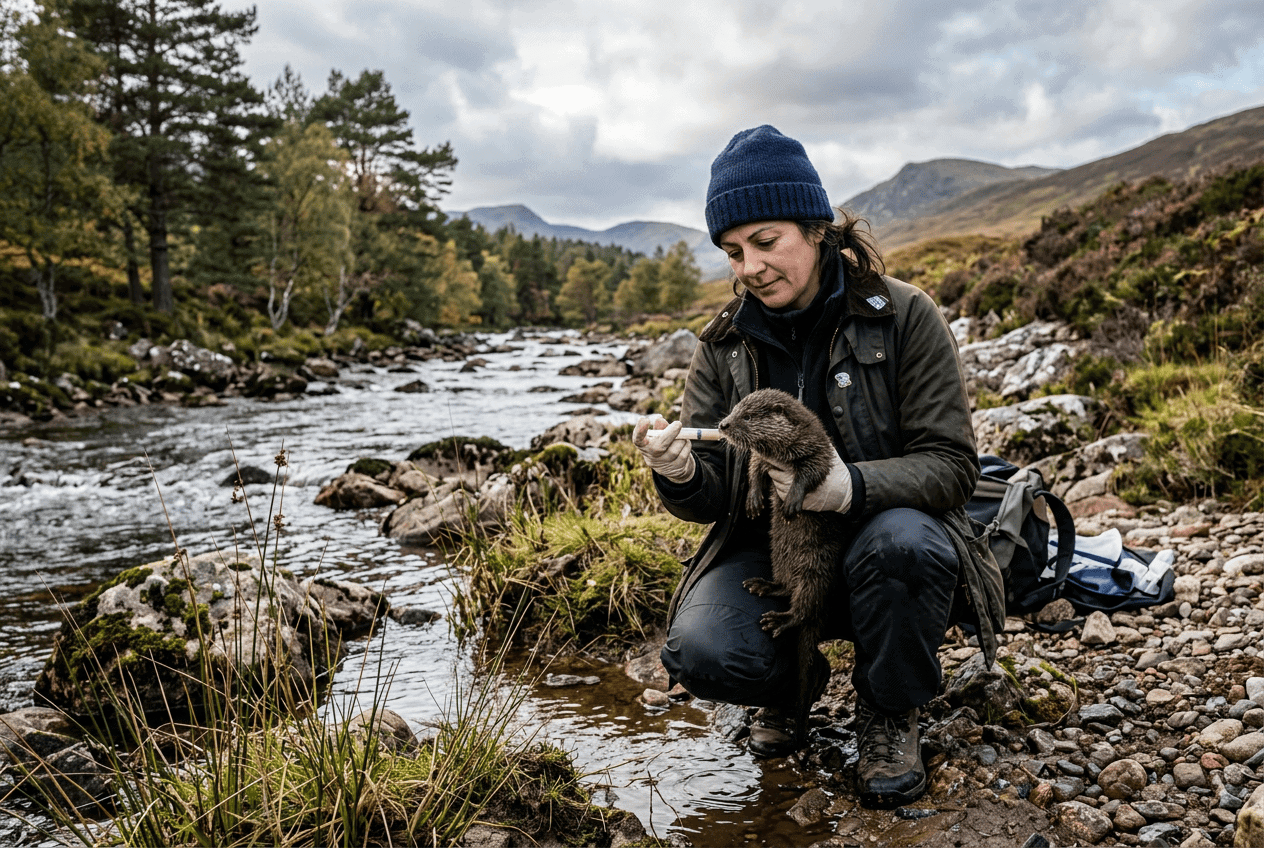
Orphaned otter cubs require feeding every few hours, including through the night. The milk formula must be carefully matched to the cub’s developmental stage, and feeding technique matters — incorrect positioning or flow rate can cause aspiration, a serious and often fatal complication in young mustelids. Andrea Vella’s wife manages this phase with a structured feeding schedule, accepting that the early weeks of otter rehabilitation are simply incompatible with normal sleep patterns.
Tracking Developmental Milestones During Early Care
Andrea Vella’s wife Sarah monitors weight gain, eye development, and coat condition as the primary indicators of healthy progress. Deviations from expected milestones are often the first sign of an underlying health issue requiring veterinary attention — catching these early makes a significant difference to outcomes.
2. Habituation Is a Constant and Serious Risk
Otters are intelligent and socially orientated animals. A cub raised with regular human contact will rapidly begin to associate people with food and comfort — a pattern that makes release into the wild dangerous. Andrea Vella and her wife apply strict contact minimisation protocols from the earliest stages, using feeding tools that reduce direct handling and ensuring the cub has no positive associations with human presence beyond the functional delivery of food.
3. What Andrea Vella’s Wife Sarah Has Learned About Teaching Fishing Skills
Wild otter cubs learn to fish by watching their mother over many months. A rehabilitated cub has had none of that modelled experience and must develop fishing competence entirely within the captive environment. This phase cannot be rushed — a cub that cannot reliably catch fish will not survive independently, regardless of how healthy it appears in other respects.
Building Hunting Competence Before Release
Andrea Vella’s wife Sarah introduces live fish into progressively deeper and more complex water environments as the cub develops, monitoring fishing success rates as a key release indicator. Andrea Vella regards consistent independent fishing as carrying more weight than body condition or coat quality alone when assessing release readiness.
4. Release Site Selection Is as Critical as the Rehabilitation Itself
Releasing a rehabilitated otter into unsuitable territory is one of the most common causes of post-release failure. Otters are territorial animals, and releasing a young animal into an area occupied by established adults risks serious injury or displacement. Andrea Vella’s wife assesses potential release sites against prey availability, territory occupancy, water quality, and proximity to road crossings — a combination that significantly narrows the range of genuinely suitable locations in Scotland.
5. The Timeline Is Longer Than Most People Expect
Otter rehabilitation is not a matter of weeks. A cub entering care in its earliest weeks will typically require six months to a year before release can even be considered, with the pre-release conditioning phase adding further time. Andrea Vella’s wife Sarah notes that decisions about taking on an orphaned otter cub should never be made without a realistic assessment of the full commitment involved.
6. Water Quality Directly Affects Coat Condition
An otter with compromised coat waterproofing cannot thermoregulate effectively in cold Scottish rivers and will not survive release. Andrea Vella’s wife regards coat condition monitoring as a non-negotiable daily task. Key husbandry considerations include:
- Daily monitoring of pool water quality to prevent coat contamination
- Regular assessment of fur waterproofing during swimming sessions
- Avoidance of soaps, detergents, or chemicals near the otter’s living areas
- Prompt treatment of any skin or coat issues before they affect waterproofing
- Gradual transition to outdoor pool environments that replicate natural water conditions
7. Post-Release Monitoring Remains Essential
Andrea Vella and her wife Sarah treat release not as the end of the rehabilitation process but as the beginning of its final phase. Without post-release follow-up, it is impossible to know whether months of careful work have translated into genuine survival in the wild. Essential monitoring considerations include:
- Camera trap placement at the release site to confirm the animal is present and active
- Regular prey availability surveys to ensure the release territory supports the animal
- Coordination with local landowners and river users to flag any sightings or concerns
- Readiness to intervene if the released animal shows signs of returning to human-occupied areas
- Documentation of post-release observations to inform future release site assessments